- Telephone: (+357) 24 633 388
- FAX: (+357) 24 635 414
LOCATION
The Municipal Quarter of Livadia is situated on the northern side of Larnaca and lies a short distance from the city. It is built at an average elevation of approximately fifteen meters, and the entire geographical area it occupies is flat. To the northeast lies the community of Oroklini, to the north the community of Kellia, to the west the Municipality of Aradippou, and to the southeast, Livadia borders the sea. The municipal quarter is connected to all these neighboring communities via paved roads, while the road network linking it to the rest of Cyprus is considered excellent, as Livadia is very close to the major motorways of Rizoelia–Paralimni and Nicosia–Larnaca.
NAME
The name of the Municipal Quarter originates from the composition of the land in the area where it was built. It is a pastureland—flat terrain with running waters and abundant grass vegetation suitable for grazing. The word livadi (meadow) traces its roots to the Ancient Greek word leimōn. In Cyprus, there are five settlements with the same name. Apart from the Municipality of Livadia, there is the village of Livadia near Polystipos in the Pitsilia region, Livadia of Karpasia near Komi Kepir, a small settlement in the Chrysochou region, and a newer settlement called Neo Livadi of Morphou.
The now non-existent settlement of Tridato, which likely lay very close to today’s Livadia, forms an inseparable part of Livadia’s historical evolution. After Tridato’s dissolution, its remaining residents laid the foundation for the creation of the new village of Livadia. According to historical records from foreign visitors, the population of Livadia fluctuated over time. In recent years, it has evolved into a municipality. The current demographic makeup of Livadia has been shaped since 1974, when thousands of displaced people settled in the area. Native residents are now a minority compared to the displaced and other newcomers who chose Livadia as their home. Nevertheless, none of them are considered outsiders. All have assimilated into the same mindset and culture, making Livadia a modern municipal quarter that still keeps its traditions alive.
CHURCHES
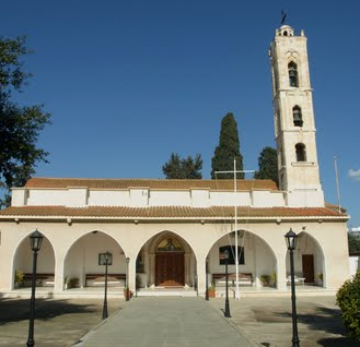
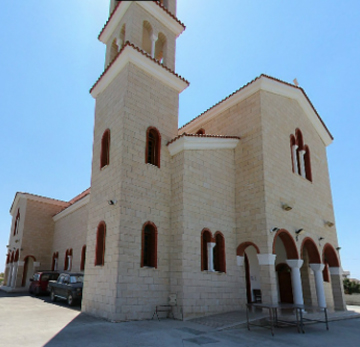
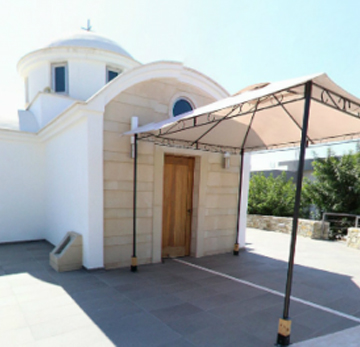
Three Orthodox Christian churches operate in the Municipal Quarter of Livadia. The oldest is dedicated to Saint Paraskevi, and the largest to the Three Hierarchs. The churches of the Three Hierarchs and Saint Savvas are newly built, while the church of Saint Paraskevi has been renovated in a way that highlights its ancient architectural beauty. In addition to these churches, the devotion and piety of the residents led to the construction of beautiful chapels scattered across the municipal quarter. Notably, Livadia is home to the only chapel in Cyprus dedicated to Saint Jude Thaddeus and Saint Paisios. Saint Jude Thaddeus is a saint unjustly overlooked by Christians due to the confusion of his name with Judas Iscariot, leading to few being named after him and no churches being built in his honor—until recently. Other chapels include those of Saint Kyriaki, Saint Panteleimon, and Saint Anastasia the Pharmakolytria, located near the border with Aradippou.
EDUCATION
On the northeastern side of the municipal quarter is the Regional Gymnasium of Livadia, a modern building with numerous classrooms, offices, labs, and a sports field. It began operating in 2002 and serves students from Livadia as well as nearby communities such as Oroklini, Troulloi, Kellia, and Pyla. Each year, 20–25 classes operate, with around 550 students enrolled. The school is twinned with the Gymnasium of Antiparos in Greece.
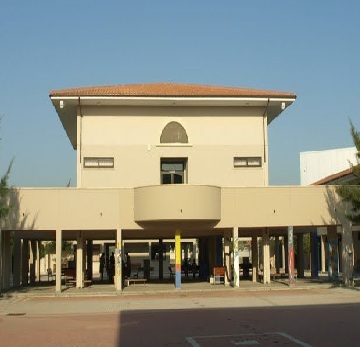
Nearby is the Regional Lyceum of Livadia, a two-story complex with a distinctive tiled roof that adds architectural charm. It started operating in the 2005–2006 school year. Students come from Livadia, Oroklini, Troulloi, Kellia, Pyla, Xylotymbou, Ormideia, Dasaki Achnas, and the AHK Settlement in Dhekelia. The Lyceum has approximately 700 students.
OCCUPATIONS OF THE RESIDENTS
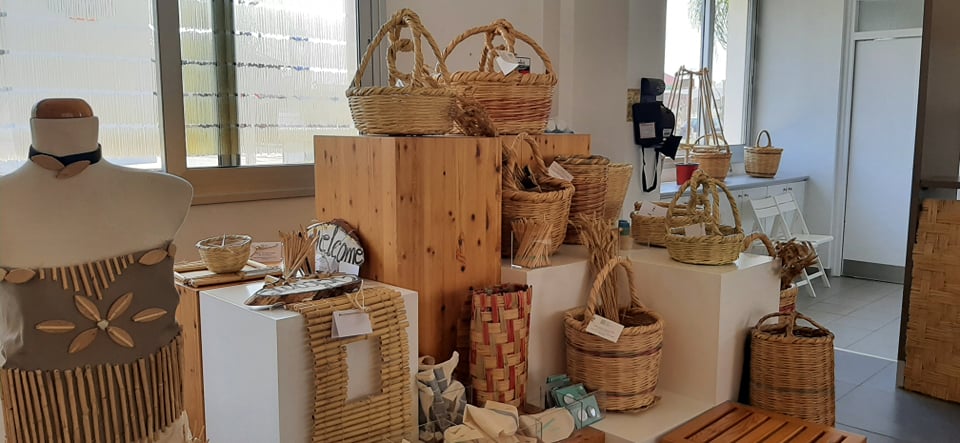
Since Livadia’s establishment, residents have engaged in various occupations. Initially, most were either shepherds, farmers, or laborers, while others practiced basket weaving. By the late 19th century and beyond, an increasing number of Livadia residents took up basketry, producing baskets, hampers, and woven mats that were in high demand. Later, during the interwar decades (1920–1930), new professions emerged such as carriage drivers and merchants, as recorded in the primary school registers. After World War II, residents also turned to professions that matched the modern era’s needs—offering services, working in tourism, commerce, small industry, and manufacturing.
BASKET WEAVING – A TRADITIONAL ART OF LIVADIA
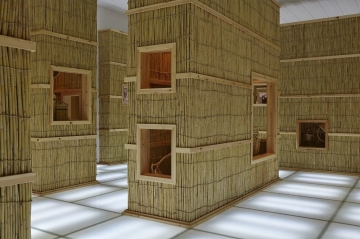
Due to its coastal location, Livadia historically featured wetlands with brackish water, fostering wild vegetation. Among these, reeds (kalamia) grew abundantly across the region. The areas where the churches of Saint Savvas and Saint Jude Thaddeus now stand were once covered in reeds, as was the location of the “Stelios” supermarket. However, Livadia’s rapid population growth led to the disappearance of many reed beds, as the land was converted into building plots.
Types of baskets: Kalathia, kofinia, kakkourkes, kofinarka, tyrokannies, tzimoi, talarka
Woven mats (Psatharkes): Large mats placed over roof beams (volikia), used to seal the roofs of houses.
CULTURE – SPORTS
Cultural activity in Livadia dates back to the 1940s, when progressive youth began organizing theatrical performances to entertain fellow villagers. Theaters were improvised in large home courtyards, with simple props and costumes borrowed from personal wardrobes. The plays performed were selected from Greek and Cypriot repertoires.
Today, the Municipality supports youth cultural engagement through a theater workshop, painting workshop, mandolin group, municipal philharmonic band, and the A.G.O. (Youth Athletic Group), involving around 500 youths in six different sports.
Football, being a team sport that offers excitement and spectacle, is the most popular sport among Cypriot youth. In Livadia, its development paralleled the formation of athletic clubs in Larnaca. Community teams were established, including “Anagennisi” (later renamed A.O.L., then “Leviadiakos,” and finally “Leviadiakos–Salamina” after merging with the refugee team “Salamina”). The pro-Greek associations formed their own football team called “TH.O.I.”
Livadia has produced many talented footballers who went on to play in First Division teams in Larnaca. Notable players for Pezoporikos include Petros Armenis, Paraschos Kimonos, Georgios Myristis, and Charalambos Amerikanos. For Alki, notable players include Antonis Skouris, Lefteris Panayi, Kostakis Katsis, Kokos Mougias, Louis Tziotzias, and Nikos Sioukris. Paris Savva played for EPA.